

1. Do we take breathing for granted?
Yes. Breathing runs automatically, but unlike the heart, we
can control it. That control directly influences stress, focus, recovery, and
performance. Poor breathing often shows up as anxiety, fatigue, pain, or
reduced capacity at work and in sport.
2. How does breathing affect stress and anxiety?
During stress, people tend to over-breathe, lowering carbon
dioxide levels and triggering symptoms like dizziness, tension, and panic.
Learning to control breathing volume and rhythm helps stabilise the nervous
system quickly.
3. Can breathing training improve health conditions?
Yes. Evidence shows structured breathing training can reduce
symptoms and improve outcomes for asthma, COPD, snoring, sleep apnoea,
post-pregnancy recovery, and chronic pain—without medication.
4. How should people start improving their breathing?
Start simple: nasal breathing, slower exhales, and awareness
of belly movement. Like any muscle, breathing muscles respond best to
progressive, guided training rather than random techniques.
5. How is breath training used for performance and work?
Stronger breathing muscles delay fatigue, improve endurance,
and increase calm under pressure. Training must be individualised—what works
for an athlete may not suit someone with anxiety or lung disease.
Bottom line:
Breathing isn’t just about relaxation. It’s about capacity, control, and
resilience.
When breathing improves, everything else follows.
Why & How Breathing helps
Why Better Breathing Unlocks Better Performance
If you want to perform better, recover faster, and feel more
in control under pressure, start with your breathing.
Here’s why.
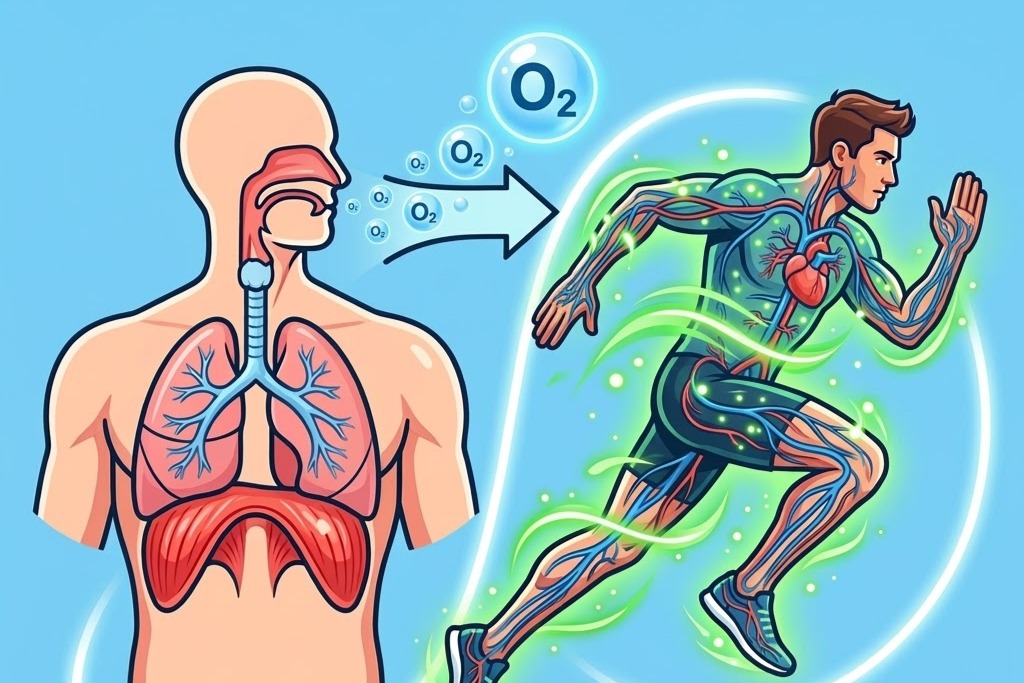
Your breathing muscles—especially the diaphragm and rib
cage—are some of the hardest-working muscles in your body. At high effort, they
can consume up to 10% of your total blood flow. When they fatigue, your
body does what it must to survive: it diverts blood away from your legs and
arms to keep you breathing.
That survival response, known as the respiratory
metaboreflex, is one of the hidden reasons performance drops, fatigue
rises, and training feels harder than it should.
The science is clear. Studies in elite athletes show that
when breathing effort is reduced, blood flow to working muscles increases
and performance improves. When breathing is harder, blood flow drops and
output suffers. The easier it is to breathe, the more energy your body has for
the work that matters.
Breathing also drives your nervous system. Poor breathing
amplifies stress, raises blood pressure, and locks you into fight-or-flight.
Efficient breathing does the opposite—it creates calm, control, and resilience
under load.
This is exactly what The Better Breathing Challenge
is designed to address.
It’s a simple, structured way to train your breathing so
exercise feels easier, recovery is faster, and performance becomes more
consistent.
When breathing improves, everything else follows.
Join the Better Breathing Challenge and experience the difference.
why do we sigh – https://youtu.be/fBoZmv4fY_4
slow breathing improves stress – https://youtu.be/L8qc26TsqiY